
Presas 1976 -1978

Title: Presas 1976 -1978
Photographer(s): Pilar Aymerich
Writer(s): Pilar Aymerich
Designer(s): Gabriel Alberti
Publisher(s): Ojos de Bue, Barcelona, Spain
Year: 2023
Print run:
Language(s): Spain, Catalan
Pages: 52
Size: 16 x 21,5 cm
Binding: Softcover
Edition: 1^ edition 2021
Print: Serper,Barcelona, Spain
Nation(s) and year(s) of Protest: Spain,1976-1978
ISBN: 978-84-126567-3-2


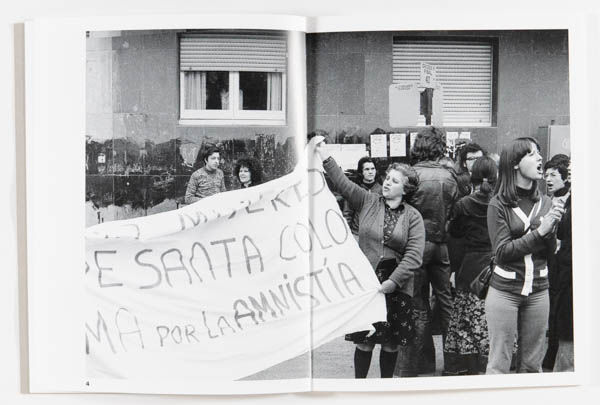


In Spain, during the convulse years after the death of the dictator Franco thousands of people protested against the prisions. They were filled with political prisioners, people that were there just for being poor, there was constant tortures, the conditions were inhuman… the anarchist prisioner Agustín Rueda was killed during a long torture session in 1978. A couple weeks later, the terrorist act GRAPO answered assasinating the Chief of Directorate of Prisons of Spain, Jesus Haddad. At that time, the political prisioners created COPEL, a group that organized strikes inside jails that spread through all the territory of Spain, and everything was about to explode. After Haddad a young Chief of Directorate of Prisons took his position and decided to let the prisioners have some power (co-management) inside of prisions until everything got out of hand again and he was way worse than his predecessor. But, during that small time, many people felt a reflection of what could be a normal reality in the rough existence of their sentence.
In the women jail of Barcelona there was a Catholic sect of nuns managing the place, making life inside the walls very harsh. Prisioners couldn’t talk, there was constant sexual abuses by the nuns and the doctors, moral indoctrination, there was no communication with the outside… The first feminist protest that happened after Franco died was in front of that jail in 1976; the protestors asked for these nuns to be replaced by state officials. Their claims were listened after Haddad was killed. After the protest of the 1st of May of 1978, some women were arrested and they didn’t see any single common prisioners, because the nuns said they would spread their political spirit. This absurd decision that was covered by the media as Middle Age ideas and the concerns of the new Chief about the situation inside of that building made the nuns cancel their contract with the State and abandon the place. The problem was that there was not enough workers trained for the job of managing a prision. State officials from all over Spain slowly moved to this building but meanwhile the main tasks of the place were being done by prisioners themselves. It’s during this unique moment that the photographer Pilar Aymerich had access to the jail, the women inside and their stories.
Commenti